Blogger, Artist, Social Media, Web Designer, Photographer- I blog about nouns-people, places and things, even when it's negative I try to put a positive spin on it. @tinawinterlikfb https://tinawinterlik.blogspot.com
🥜 Is Peanut Butter Safe for Kidney Disease? What I Just Learned Might Surprise You
I’ve always thought of peanut butter as a simple, affordable, and even comforting food. It’s plant-based, protein-rich, and easy to digest — which is why it was originally promoted as a nutritious option for people who couldn’t chew meat, including malnourished kids and the elderly.
But recently, I learned something that really surprised me: peanut butter is not a good choice for people or pets with kidney disease.
Whether you're managing chronic kidney disease (CKD) yourself, caring for a loved one, or looking after a pet with kidney issues, this is something important to understand — and I wish I had known it sooner.
❌ Why Peanut Butter Isn’t Good for Kidney Disease
Even though it’s plant-based, peanut butter poses several problems for those with impaired kidney function:
1. High in Phosphorus
People and animals with kidney disease need to limit phosphorus because damaged kidneys can’t filter it out properly.
Too much phosphorus leads to bone damage, calcium imbalance, itching, and even heart problems.
Just 2 tablespoons of peanut butter can have around 200 mg of phosphorus — too much for a renal diet.
2. Protein Overload
Kidney-friendly diets often require lower or moderate protein to reduce the strain on kidneys.
Peanut butter contains about 8g of protein per 2 tablespoons, which may be too high for some stages of kidney disease — especially in pets like dogs that also have allergies or other sensitivities.
3. Hidden Sodium & Additives
Many commercial peanut butters contain added salt, sugar, or oils.
Salt contributes to high blood pressure, which can worsen kidney function.
Some peanut butters even contain xylitol, a sweetener that is deadly to dogs, even in small amounts.
4. Potassium Content
Peanut butter also has moderate potassium, which people with kidney disease may need to limit. Too much potassium in the blood can lead to irregular heartbeats or worse.
✅ Are There Safer Alternatives?
If you love spreads or need something easy to add calories and flavor, here are a few options that might work if cleared by your doctor or vet:
Unsalted almond or sunflower seed butter (check labels for phosphorus/potassium)
Homemade hummus with low-sodium and no added tahini
Tahini (moderate phosphorus but lower potassium than peanuts)
For dogs: vet-approved kidney diets, or consult a veterinary nutritionist for low-protein, low-phosphorus homemade recipes
💡 Final Thoughts
Peanut butter may seem harmless — or even helpful — especially for plant-based diets, picky eaters, or medication hiding tricks. But for anyone with kidney disease, it’s best to approach it with caution.
I’m sharing this because I didn’t know, and maybe you didn’t either. It's another reminder that nutrition is never one-size-fits-all — and even healthy foods can have hidden risks depending on your health condition.
Take care of your kidneys 💛 — they do more for you than you realize.
Disclaimer, AI wrote this. Personally I am against cloning. I am against alot of stuff, I can't stop it, so just share info on it
In 1996, the world was introduced to Dolly the sheep, the first mammal cloned from an adult somatic cell. This groundbreaking achievement, hailed as a monumental leap in genetic science, sparked global debates about the potential uses—and dangers—of cloning technology. I still remember holding onto a newspaper clipping from that time, awestruck by the implications for medicine and biology. Dolly's successful cloning raised hopes for new medical treatments and even possibilities of reviving extinct species. But it also opened the door to profound ethical dilemmas, particularly concerning human cloning.
Fast forward to the early 2000s, and the field of cloning was once again thrust into the spotlight—this time for all the wrong reasons. In 2004, South Korean scientist Hwang Woo-suk made international headlines when he claimed to have successfully cloned human embryos and extracted stem cells from them. These claims, published in reputable journals, initially earned him fame and praise. However, a scandal soon erupted. Investigations revealed that Hwang had fabricated much of his data and engaged in unethical practices, including illegally obtaining human eggs by paying donors and pressuring his own subordinates to contribute.
Hwang's fraudulent actions did severe damage to both the scientific community and the ethical boundaries of cloning research. In 2009, he was convicted of embezzlement and bioethics violations, but his work in animal cloning continued. Hwang’s research team successfully cloned the first dog, Snuppy, in 2005, and he shifted his focus to cloning animals instead of humans. Nevertheless, the damage was done—his case serves as a stark reminder of the dangers that arise when science lacks oversight and ethical boundaries.
This scandal changed the trajectory of cloning research and led to stricter international regulations regarding human cloning. While the cloning of large mammals continues to offer potential medical and agricultural benefits, the dream of human cloning remains fraught with controversy and ethical roadblocks.
As cloning technologies evolve, it is crucial to keep reflecting on the lessons from these cases and ensure that scientific advancements are matched with strong ethical considerations. From Dolly to today’s debates, cloning remains a powerful yet controversial tool in the hands of science.
References:
The legacy of Hwang Woo-suk's scandal, .
Dolly the Sheep's impact on cloning, remembered through media clippings and scientific reports.
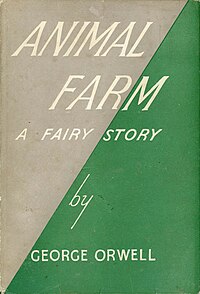
http://en.wikipedia.org/wiki/Animal_Farm
I visit Wikipedia and I edited out the Soviet stuff because many people - the younger generation do not know this history and I don't know it well myself, but the point is to adapt the info to our own corrupted, twisted, sad political, ecological environment and help people see what is happening.
We need to work fast here, with the election coming, we have to reach out to the kids. I call them kids because I am 53 and I am old to alot of you and you may not want to hear what I have to say. It is critical EVERYONE votes this time. We have to get rid of the old way of voting, that's the next step, but MOST IMPORTANT, Stephen Harper MUST NEVER be elected EVER EVER AGAIN! NEVER!
If we do not act, Canada will be destroyed as the one we know and love. It's beeing sliding down hill fast but we can turn it around. By going green and focusing on gardens- VICTORY GARDENS, composting, raising our own food and building shelters for everyone. No child should go hungry.
Anyways, here's what I got, this is from the book-wikipedia - the movie is a little different but we just need to re-write all the characters.
Okay here goes. Pigs Old Major-the inspiration that fuels the Rebellion in the book Napoleon-not much of a talker, but with a reputation for getting his own way. Napoleon is the main villain of Animal Farm Snowball -Napoleon's rival and original head of the farm after Jones' overthrow. Squealer-A small, white, fat porker who serves as Napoleon's right-trotter pig and minister of propaganda Minimus-A poetic pig who writes the second and third national anthems of Animal Farm after the singing of "Beasts of England" is banned. The Piglets -Hinted to be the children of Napoleon and are the first generation of animals subjugated to his idea of animal inequality. The young pigs- – Four pigs who complain about Napoleon's takeover of the farm but are quickly silenced and later executed Pinkeye – A minor pig who is mentioned only once; he is the pig that tastes Napoleon's food to make sure it is not poisoned, in response to rumours about an assassination attempt on Napoleon. Humans- Mr. Jones- The former owner of the farm, Jones is a very heavy drinker. The animals revolt against him after he drinks so much that he does not feed or take care of them. Mr Frederick -The tough owner of Pinchfield, a small but well-kept neighbouring farm, who briefly enters into an alliance with Napoleon. He is an allegory of Adolf Hitler Mr Pilkington – The easy-going but crafty and well-to-do owner of Foxwood, a large neighbouring farm overgrown with weeds Mr Whymper – A man hired by Napoleon to act as the liaison between Animal Farm and human society. At first he is used to acquire goods needed for the farm, such as dog biscuits and paraffin, but later he procures luxuries like alcohol for the pigs
Horses and donkeys Boxer – A loyal, kind, dedicated, hard working, and respectable cart-horse, although quite naive and gullible. Boxer does a large share of the physical labor on the farm, adhering to the simplistic belief that working harder will solve all the animal's problems. He has been described as "faithful and strong"; he believes any problem can be solved if he works harder. Mollie – A self-centered, self-indulgent and vain young white mare who quickly leaves for another farm after the revolution. Clover - A gentle, caring female horse, who shows concern especially for Boxer, who often pushes himself too hard. She seems to catch on to the sly tricks and schemes set up by Napoleon and Squealer. Benjamin – A donkey, one of the oldest, wisest animals on the farm, and one of the few who can read properly. He is skeptical, temperamental and cynical: his most frequent remark is, "Life will go on as it has always gone on—that is, badly.
Other animals Muriel – A wise old goat who is friends with all of the animals on the farm. She, like Benjamin and Snowball; is one of the few animals on the farm who can read.
The Puppies – Offspring of Jessie and Bluebell, taken away from them by Napoleon at birth and reared by Napoleon to be his security force.
Moses – The raven "was Mr. Jones's especial pet, was a spy and a tale-bearer, but he was also a clever talker." Initially following Mrs. Jones into exile, he reappears several years later and resumes his role of talking but not working. He regales Animal Farm's denizens with tales of a wondrous place beyond the clouds called "Sugarcandy Mountain, that happy country where we poor animals shall rest forever from our labours!"
The Sheep – They show limited understanding of the Animalism and the political atmosphere of the farm, yet nonetheless they blindly support Napoleon's ideals with vocal jingles during his speeches and meetings with Snowball.
The Hens – The hens are among the first to rebel against Napoleon.
The Cows – Their milk is stolen by the pigs, who learn to milk them. The milk is stirred into the pigs' mash every day, while the other animals are denied such luxuries.
The Cat – Never seen to carry out any work, the cat is absent for long periods, and is forgiven because her excuses are so convincing and she "purred so affectionately that it was impossible not to believe in her good intentions".[24] She has no interest in the politics of the farm, and the only time she is recorded as having participated in an election, she is found to have actually "voted on both sides".
The pigs Snowball, Napoleon, and Squealer adapt Old Major's ideas into "a complete system of thought", which they formally name Animalism,
Soon after, Napoleon and Squealer partake in activities associated with the humans (drinking alcohol, sleeping in beds, trading), which were explicitly prohibited by the Seven Commandments. Squealer is employed to alter the Seven Commandments to account for this humanisation
The original commandments are:
Whatever goes upon two legs is an enemy. Whatever goes upon four legs, or has wings, is a friend. No animal shall wear clothes. No animal shall sleep in a bed. No animal shall drink alcohol. No animal shall kill any other animal. All animals are equal.
Later, Napoleon and his pigs secretly revise some commandments to clear themselves of accusations of law-breaking. The changed commandments are as follows, with the changes bolded:
No animal shall sleep in a bed with sheets. No animal shall drink alcohol to excess. No animal shall kill any other animal without cause.
Eventually, these are replaced with the maxims, "All animals are equal, but some animals are more equal than others", and "Four legs good, two legs better!" as the pigs become more human. This is an ironic twist to the original purpose of the Seven Commandments, which were supposed to keep order within Animal Farm by uniting the animals together against the humans and preventing animals from following the humans' evil habits.
Through the revision of the commandments, Orwell demonstrates how simply political dogma can be turned into malleable propaganda.
We need to put some good music in it...maybe this? Pink Floyd's 1977 record album Animals was partially inspired by Animal Farm.[67] It categorises people as pigs, dogs, or sheep.
Pigs on the Wing (Part One) (Waters) 1:24
If you didn't care what happened to me, And I didn't care for you, We would zig zag our way through the boredom and pain Occasionally glancing up through the rain. Wondering which of the buggars to blame And watching for pigs on the wing.
---------------------------------------------------------- Pigs (Three Different Ones) (Waters) 11:26
Big man, pig man, ha ha charade you are. You well heeled big wheel, ha ha charade you are. And when your hand is on your heart, You're nearly a good laugh, Almost a joker, With your head down in the pig bin, Saying "Keep on digging." Pig stain on your fat chin. What do you hope to find. When you're down in the pig mine. You're nearly a laugh, You're nearly a laugh But you're really a cry.
You know that I care what happens to you, And I know that you care for me. So I don't feel alone, Or the weight of the stone, Now that I've found somewhere safe To bury my bone. And any fool knows a dog needs a home, A shelter from pigs on the wing.