Blogger, Artist, Social Media, Web Designer, Photographer- I blog about nouns-people, places and things, even when it's negative I try to put a positive spin on it. @tinawinterlikfb https://tinawinterlik.blogspot.com
“I blog about nouns — people, places, and things.
Even when it's negative, I try to put a positive spin on it.”
Today, I’m pausing to acknowledge something big:
This blog has reached 1,000,000 views.
It’s not just a number — it’s a reflection of years of writing, creating, witnessing, documenting, surviving, and sharing. Over 2,400 posts later, through personal storms and global ones, I’ve stayed committed to speaking from the heart.
There were times when I didn’t know if it mattered. Times when the world felt too heavy, or too loud. But I kept blogging — for those who needed connection, for those who were searching, and honestly, for myself too.
This blog has never been about chasing clicks or followers. I turned off comments when things got ugly, and I’ve kept it that way — not out of fear, but self-respect. Not everything needs to be a debate. Sometimes, it’s okay to just speak and let it land where it will.
So, to the quiet readers, the kind souls, and the passersby who stopped for a moment and found something here — thank you.
I don’t need applause. I just needed to be heard.
And 1 million times… I was.
Until recently, I didn’t know much about Charlie Angus. His name had floated around in the background of Canadian politics, but I hadn’t followed his career closely. That changed a few months ago.
Something about the way he spoke — plainly, with purpose, and deep compassion — made me stop and listen. Whether he was talking about Indigenous rights, ethics in government, or the struggles of everyday Canadians, his words rang with sincerity. In a world where politics often feels disconnected, Charlie seemed real.
And now, after 21 years as the Member of Parliament for Timmins—James Bay, Charlie Angus has officially retired from federal politics. On May 13, 2025, he signed off in Ottawa — but not without leaving behind a powerful legacy.
Timmins—James Bay is one of the largest and most diverse ridings in Canada, home to many remote and Indigenous communities. Throughout his tenure, Charlie was a relentless advocate for Indigenous rights and justice. He brought national attention to the crisis of unsafe drinking water in First Nations communities, poor housing conditions, and the long-term effects of residential schools.
One of his most powerful contributions was through his book, Children of the Broken Treaty, which exposed the systemic underfunding of education for Indigenous children in Canada. It centers on the story of Shannen Koostachin from Attawapiskat — a courageous youth leader whose dream of safe and equitable schools lives on through Shannen’s Dream, a movement Charlie helped amplify in Parliament and across the country.
What makes his story even more compelling is that before politics, and even alongside it, Charlie was part of the music scene. He played in the punk band L’Étranger and later formed the folk-rock group Grievous Angels. Music was — and still is — one of the ways he connects with people and tells stories that matter. It’s rare to see a public figure who blends art, activism, and politics so seamlessly.
What stands out to me, even from this short window of getting to know his work, is that Charlie didn’t treat politics as a career ladder — he treated it as service. He used his voice to raise others up, to challenge the status quo, and to fight for justice.
His farewell message said, “The work carries on. See you on the road.” And I believe him.
So, thank you Charlie Angus — not just for the decades you gave to public service, but for showing that principled leadership, creativity, and community spirit can coexist. I may have found your voice late, but it left a strong impression. I’ll be listening — and watching — for what you do next.
As we approach the upcoming elections in Canada, it's impossible not to reflect on how the political system can shape those who enter it. The 1972 film The Candidate, starring Robert Redford, offers a sobering look at the compromises politicians make as they climb the ranks. Redford's character, Bill McKay, starts with idealistic intentions but, as the campaign progresses, he finds himself trapped by the very system he hoped to reform—forced to make promises and strike deals that conflict with his original values.
This mirrors the reality for many politicians today, not just in Canada, but across the globe. Once in power, they often face a paradox: in order to secure their position, they must give up a part of themselves, their ideals, and their authenticity. The compromises become necessary to survive in the political game, but they can ultimately lead to disillusionment and a disconnect with the very people they promised to serve.
As election season approaches, it's important to reflect on the promises made by those seeking office. Will they stay true to their values, or will they too be shaped by the complex web of deals and compromises that politics demands? The mess of global politics today underscores the need for voters to critically examine not just what politicians say, but what they do once they’ve made it to the top.
As citizens, we have the power to hold them accountable—but we must be vigilant in recognizing when those promises are too far removed from the realities of governance.
Wake Up, Canada: The Deepfake War is Here, and You’re the Target
If you think the world is getting harder to trust, buckle up—because what’s coming will shake democracy to its core. We’re no longer just dealing with misinformation or AI-generated spam; we’re up against full-blown deepfake warfare, where reality itself is being rewritten before our eyes.
They Can Fake Anyone—Even Live on Camera
A recent demonstration proved how dangerous this tech has become. A man recorded an interview over Zoom, then fed the footage into an AI tool that asked if the interviewee gave permission to be altered. He lied—and in minutes, the software asked what he wanted the person to say. The result? A convincing, altered video where the interviewee appeared to say something they never actually did.
This isn’t hypothetical. It’s real, and it’s happening right now.
U.S. Senator Ben Cardin was recently targeted by a deepfake impersonator claiming to be a Ukrainian diplomat.
Job candidates are using AI-generated faces and voices to cheat during remote interviews.
Political figures, journalists, and activists are being digitally manipulated to say whatever someone with an agenda wants.
Now imagine this being used in a Canadian election. Imagine a doctored video appearing of a leader, seemingly admitting to corruption, or supporting extremist policies. Would the public know it’s fake in time? Or would the damage already be done?
Facebook, YouTube, and the Algorithmic Mind Control Machine
If you’re on Facebook or YouTube, you’ve probably noticed an onslaught of Conservative ads popping up everywhere. That’s not by accident. AI-powered ad campaigns are targeting you based on psychological profiling—serving you content designed to sway your emotions.
Now, add deepfakes to the mix. The technology is already here. It’s only a matter of time before AI-generated attack ads and fake videos flood social media, designed to destroy reputations, influence voters, and manipulate reality.
The RCMP, the Hogue Report, and Foreign Interference
Justice Marie-Josée Hogue’s recent report exposed how China, India, and Russia are already meddling in our democracy. They don’t need to hack voting machines—they just need to hack our minds. The RCMP has warned about disinformation campaigns, but is the government prepared for an all-out deepfake assault?
How to Fight Back (Before It’s Too Late)
Question Everything. If you see a shocking video, don’t take it at face value. Deepfakes are designed to trigger your emotions before you can think critically.
Check the Source. Legitimate news organizations verify before publishing. If a wild claim only appears on partisan websites or viral TikToks, it’s likely manipulation.
Be Wary of AI-Generated Political Ads. Meta (Facebook, Instagram) now requires political advertisers to disclose AI use—but will they enforce it? Scrutinize every ad you see.
Support Independent Journalism. The only way to combat AI-driven lies is with real investigative reporting.
Demand Action. Our laws are not ready for deepfake propaganda. Call on the government to introduce urgent AI verification laws before the next election.
Wake Up Before It’s Too Late
Canadians are about to get royally f*cked if they don’t wake up to this threat. This isn’t just about politics—it’s about truth itself. Once deepfake technology is fully weaponized, no one will know what’s real anymore.
And once that happens, democracy is finished.
Share this. Talk about this. Educate yourself. Because the disinformation war isn’t coming. It’s already here.
Return to Sender: Has America Void Its Lease on Liberty?
Watching from Canada, it's hard not to notice the irony of the current political climate in the U.S. The country that brands itself as the beacon of freedom and democracy is now teetering on the edge of authoritarianism, with its most infamous figures—Trump and Musk—treating liberty like a cheap commodity to be bought, sold, or ignored altogether.
This brings us to Lady Liberty herself. Given as a gift from France in 1886, she was meant to stand as a symbol of hope, justice, and refuge for those seeking a better life. But in 2025, that same nation is threatening mass deportations, criminalizing dissent, and allowing billionaires to play puppet masters with democracy. So the question arises: has the U.S. voided its lease on liberty?
A recent piece in the New York Post scoffed at the idea of returning the statue, dismissing it as absurd. But let’s entertain it for a moment. If freedom is now conditional—reserved only for the wealthy, the powerful, and those who toe the line—then maybe Lady Liberty is better off elsewhere. Perhaps she should be seeking asylum in Canada, where at least the concept of human rights isn’t treated as a relic of the past.
Political cartoons are already capturing this sentiment—Liberty bound and gagged, seeking asylum, or weeping as America slides further into the hands of those who would rather see it burn than share power. These images, often dismissed as satire, feel increasingly prophetic.
If Trump wants to annex Canada, if Musk wants to turn democracy into a pay-to-play system, if the so-called "land of the free" is rapidly turning into a dystopian playground for authoritarians, then maybe France should consider sending a boat. Because the America that Lady Liberty was meant to symbolize? It’s fading fast.
Fight Back with Art, Warrior Up with Art
#FightBackWithArt
#WarriorUpWithArt
Art has always been a weapon against tyranny. From political cartoons to graffiti to digital media, artists are pushing back. If they’re so quick to dismiss the idea of returning the Statue of Liberty, maybe that means it hits a nerve. And that alone makes it worth talking about.
Would love to hear thoughts—has America voided its lease on Liberty? Would France ever dare to take her back? Let’s keep the conversation going.
Pope Francis Speaks Out Against Trump’s Mass Deportations—But Stays Silent on Elon Musk
Recently, Pope Francis issued a strong rebuke of former U.S. President Donald Trump’s immigration policies, particularly the ongoing mass deportations under his administration. In an open letter to U.S. Catholic bishops on February 11, 2025, the Pope described these policies as a “major crisis” that “damages the dignity of men and women.”
A Call for Compassion
Pope Francis has long been a vocal advocate for migrants and refugees, often urging world leaders to adopt policies that prioritize human dignity, compassion, and justice. In his letter, he warned against political narratives that portray migrants as criminals and stressed the moral duty to recognize the humanity of those seeking a better life.
He wrote:
“The dignity of every man and woman must be respected, regardless of their place of birth. Mass deportations create suffering and division rather than addressing the root causes of migration.”
This statement comes at a time when the U.S. has seen a sharp increase in deportations, particularly targeting families and individuals who have lived in the country for years.
In addition to addressing Trump’s policies, Pope Francis also pushed back against Vice President JD Vance, who recently used the concept of “ordo amoris” (a theological principle about the order of love) to justify prioritizing the well-being of American citizens over migrants. Vance argued that Christianity allows for a “hierarchy of love,” where caring for fellow countrymen should take precedence over extending compassion to outsiders.
Pope Francis rejected this interpretation, pointing to the Parable of the Good Samaritan as a true representation of Christian love. He emphasized that:
“True Christian love does not set conditions on who deserves help. We are called to love and serve, not to exclude.”
While Pope Francis has been outspoken about Trump’s immigration policies, he has remained notably silent about Elon Musk, despite Musk’s influence in areas like AI, space exploration, wealth inequality, and social media.
This silence raises questions. Why hasn’t the Pope addressed Musk, who owns companies that directly impact the future of humanity?
Possible Reasons for the Silence
Different Priorities – The Pope focuses primarily on social justice issues like migration, poverty, and climate change. Musk, despite his wealth, may not yet be seen as directly opposing these values.
Strategic Silence – Criticizing Musk could backfire, given his massive online following and influence. The Vatican may prefer private engagement over public confrontation.
Potential Behind-the-Scenes Discussions – The Church has a history of engaging influential figures privately before making statements. It’s possible that conversations are happening out of the public eye.
Musk’s Complex Role – Unlike Trump, whose policies openly contradict Catholic social teachings, Musk’s impact is more nuanced. He champions technological progress, which aligns with some of the Pope’s concerns (e.g., clean energy), but also raises ethical issues (e.g., AI, wealth inequality).
If Pope Francis were to address Musk’s influence, he might focus on:
AI and Ethics – Warning against AI replacing human decision-making.
Space Colonization and Humanity – The ethics of billionaires exploring Mars while people suffer on Earth.
Social Media Responsibility – Addressing how platforms like X (formerly Twitter) contribute to misinformation and division.
Pope Francis’s latest statements reinforce his commitment to human rights, dignity, and justice for migrants. His critique of Trump and Vance challenges political leaders who use religion as a justification for exclusion rather than as a guide for compassion.
However, his silence on Elon Musk raises important questions about the Vatican’s stance on technology, billionaires, and the ethics of digital power. As AI, space colonization, and social media continue to shape our world, will Pope Francis eventually address Musk’s influence? Or will he leave that conversation for future religious leaders?
Either way, his recent words serve as a reminder that faith should be a force for unity and kindness, not division and fear.
Lately, it feels like the world is spiraling. People are exhausted, overwhelmed, and struggling to keep up with everything—from the cost of living to political chaos to the sheer weight of everyday survival. In Canada, we’re seeing it firsthand: a housing crisis, rising food insecurity, deepening inequality, and policies that prioritize appearances over human lives.
The recent freeze on supportive housing in Vancouver’s Downtown Eastside is just one example of how disconnected leadership has become. In the middle of winter—when the cold is deadly, when people are already suffering—politicians have decided to pause projects that could save lives. Why? Because they want to force surrounding municipalities to step up. But in the meantime, people are left with nothing.
It’s not just Vancouver, though. Across Canada, homelessness is growing, while governments focus on short-term optics instead of long-term solutions. And the worst part? So many people have become numb to it. We walk past people sleeping on the street as if it’s normal. It’s not.
Why Are We Struggling to House and Feed People?
It’s a question that shouldn’t need asking. Canada is wealthy. We have land, resources, and knowledge. So why is it getting harder to meet our most basic human needs?
Governments prioritize big events like FIFA over social programs.
Housing has become a commodity instead of a right.
The cost of food skyrockets, but wages don’t keep up.
Newcomers arrive looking for safety and opportunity but are met with high rents and low support.
Community ties are fraying—people are too exhausted or afraid to engage.
We’re watching Canada transform before our eyes. The country we knew—where neighbors helped each other, where people had hope for the future—is slipping away. But that doesn’t mean we have to accept it.
A Different Future Is Possible
Despite all of this, I refuse to believe we’re beyond repair. There is a different way forward, but it requires a shift in values. Not just from politicians, but from all of us.
Imagine this:
Small, sustainable homes instead of endless luxury towers.
Local, fresh food—Coast Salish diets, community gardens, farmers' markets.
Kids growing up surrounded by art, music, and storytelling, learning from elders instead of being glued to screens.
A society where we care for each other—where we support single moms, help elders stay in their homes, and teach men and women to be healthier, kinder, and more empathetic.
A break from the endless cycle of media and internet addiction, reconnecting with the land and each other.
This isn’t a utopian dream. It’s what people lived for generations before profit and politics took over. It’s what Indigenous communities have always known. It’s what we could have again—if we fight for it.
We Can’t Afford to Stay Numb
I get it. People are tired. The world is overwhelming. But if we let numbness take over, we lose everything. This isn’t just about homelessness or FIFA or housing—it’s about the kind of society we want to live in.
If you feel helpless, start small:
Pay attention. Question the narratives being sold to us.
Support local initiatives that actually help people.
Speak out against policies that put profit over human lives.
Reconnect—with nature, with creativity, with real human connection.
The future is being shaped right now. If we don’t fight for something better, someone else will shape it for us. And if recent decisions tell us anything, it won’t be in our best interest.
Canada stands at a critical moment in history. The Hogue Report on foreign interference has exposed serious vulnerabilities in our democracy, making 51 recommendations to strengthen our institutions and protect our elections.
But we’ve seen this before. The Truth and Reconciliation Commission (TRC) released 94 Calls to Action in 2015, yet nearly a decade later, very few have been fully implemented. The same pattern of inaction and delay could happen with the Hogue Report—unless we demand better.
So what happens next? Do we act to protect our democracy, or do we allow foreign interference to erode our freedoms? Let’s explore two possible futures: one where we take action, and one where we don’t.
Future 1: A Canada That Took Action (A Scenario of Hope and Strength)
It’s 2030. Canadians head to the polls with confidence, knowing that their votes will count. The past six years have brought major changes.
The government took the Hogue Report seriously, implementing tough new protections against foreign interference. Intelligence agencies coordinate effectively, stopping attempts to manipulate elections before they happen.
Diaspora communities—who were once targeted for intimidation—now feel safe. Chinese Canadians no longer fear surveillance or pressure from Beijing. Sikh activists can voice concerns about India’s actions without facing harassment. The government actively defends those who speak out, refusing to let foreign powers silence them.
Online disinformation campaigns are quickly detected and dismantled before they can take root. Social media platforms are held accountable for allowing foreign-backed propaganda. Voter confidence is restored, and participation in elections reaches record highs.
Canada has become a global leader in defending democracy. While threats still exist, they are met with swift and decisive action. The country stands stronger than ever, proving that when people demand change, real progress is possible.
Future 2: A Canada That Did Nothing (A Scenario of Darkness and Decay)
It’s 2030, but this is not the Canada we once knew.
The last federal election was a disaster—rife with accusations of fraud, foreign manipulation, and deep public distrust. People no longer believe in the system, and voter turnout has plummeted.
China, India, and other foreign actors learned that Canada doesn’t defend itself, so they doubled down. Covertly backed politicians now hold key positions in government. Policies favoring foreign regimes slip through unnoticed, while those who try to speak out are silenced.
Journalists and activists face increasing threats. Some vanish without a trace. Others flee, knowing Canada is no longer a safe place to expose corruption. Laws meant to protect free speech are twisted to criminalize dissent.
Online, the truth is nearly impossible to find. AI-generated fake news floods social media, manipulating public opinion. No one knows what to believe anymore.
Protests erupt, but they are crushed by a government that has been infiltrated by foreign influence. Democracy hasn’t just eroded—it has collapsed. Canada has become a battleground for international powers, and its people are the casualties
The Choice Is Ours: What Happens Next?
These futures are not just hypotheticals. They depend on whether action is taken now.
The government may be tempted to delay, water down, or ignore the recommendations of the Hogue Report. If they do, Canada will become even more vulnerable to foreign interference.
But if people demand action, change is possible.
What You Can Do
✔️ Write to your MP – Demand full implementation of the Hogue recommendations. Ask them what steps they are taking to protect Canadian democracy.
✔️ Support independent media – Many mainstream outlets downplay foreign interference. Independent journalists often do the hard work of exposing the truth.
✔️ Stay informed – Fact-check news sources, question narratives that seem designed to divide, and be aware of foreign disinformation tactics.
✔️ Use your vote – Apathy only benefits those who want to weaken democracy. Even when trust is low, refusing to participate makes it worse.
Will Canada Rise to the Challenge?
The future is unwritten. The Hogue Report has given us a roadmap, but it’s up to the people to demand action.
Will Canada defend its democracy? Or will we watch it slip away, one ignored recommendation at a time?
Friends, Fellow Warriors: Let’s Talk About What’s Going On
We’ve been through battles before—fighting for what’s right, protecting what we hold dear. And now, there’s something stirring in the air. You’ve probably seen it: Elon Musk, one of the most powerful voices in tech, is singing praises for Pierre Poilievre, a leader whose playbook feels uncomfortably close to what we’ve seen south of the border. It’s raising red flags. Why? Because it feels like a distraction. It feels like a setup. But we’re not going to lay down, are we?
Here’s why this might be happening—and what we can do to protect the democracy we’ve fought so hard to build.
---
Why Musk and Poilievre?
1. Big Money Talks: Musk’s companies thrive on deregulation and tax breaks, things Poilievre could easily roll out.
2. Populist Power Grab: Musk likes leaders who "shake things up," even if it means undermining institutions that protect people like us.
3. Distracting Us from Real Problems: Focusing on Poilievre takes our eyes off inflation, housing, and climate struggles that need urgent attention.
4. Clicks and Chaos: Musk owns X (formerly Twitter). Stirring the pot with polarizing figures drives traffic, and traffic makes him money.
5. Poking the Bear: Canada’s strong, steady democracy might be a target for those who want to see it destabilized.
6. Climate Rollbacks: Poilievre’s policies might mean weaker climate action, something that benefits big oil and certain elites.
7. Mistrust Grows: Highlighting divisive voices erodes our trust in the very systems that keep us safe and fair.
8. Geopolitical Strings: Powerful people play powerful games. Canada’s role in global politics is bigger than we think.
9. Focus Shift: While we debate politics, we might miss the global crises Musk and his allies are positioning themselves around.
10. Musk’s Personal Agenda: Let’s face it, the man likes the spotlight and amplifying voices that echo his own libertarian ideals.
---
What We Can Do Together
We’re tired, but we’re not beaten. Here’s how we stand tall:
1. Stay Sharp: Read widely. Don’t trust one source. Dig for the truth.
2. Question Everything: Don’t take any claims—especially big ones—at face value. Check, double-check, and keep asking why.
3. Talk It Out: Bring neighbors, friends, and family into the conversation. Listening and sharing rebuilds trust.
4. Support Real News: Independent journalism matters. Subscribe, share, and amplify those doing the hard work.
5. Teach the Tools: Let’s arm ourselves and others with the knowledge to spot misinformation and manipulation online.
6. Call for Transparency: Demand social media platforms play fair. No more shadowy algorithms or unchecked propaganda.
7. Protect Our Elections: Push for limits on corporate and foreign money in Canadian politics.
8. Show Up Locally: Attend those community meetings. Write to your MP. Vote like it’s life or death—because it is.
9. Back Grassroots Efforts: Join or support organizations fighting for justice, fairness, and accountability.
10. Stay Watchful: Keep an eye on where the money and influence are coming from. Don’t let foreign powers or tech moguls shape our future.
---
We know you’re weary. We know it feels like the odds are stacked. But every time we’ve faced a storm, we’ve risen stronger. This is no different.
So, let’s hold the line. For our democracy.
For our communities. For the future we believe in. Together, we can turn this tide.
When people talk about the “Harper IDU Group,” they are usually referring to
former Prime Minister Stephen Harper and his role as Chairman of the International Democracy Union (IDU).
The IDU is a global alliance of centre-right political parties, founded in 1983. Its goal is to connect like-minded parties, promote democratic systems, and share policy ideas across countries.
Stephen Harper has served as Chairman since February 21, 2018, and continues to play a role in organizing forums, meetings, and international political networking events.
The organization includes dozens of member parties from around the world, creating a space where conservative leaders collaborate, exchange strategies, and discuss global issues such as economics, security, and governance.
🌍 Why This Matters
For many Canadians, Harper’s role on the global stage raises important questions — not just about international politics, but about influence.
As Chair of the IDU, he is no longer only a former Canadian leader — he is part of a broader international political network.
This is where perspectives begin to differ.
⚖️ Points of Concern (Perspective & Debate)
Here are concerns some critics and observers raise — it’s important to frame these as viewpoints, not proven facts:
1. Global Promotion of Conservative Policies
The IDU promotes centre-right ideas globally, which may include policies around privatization, taxation, and reduced government spending — approaches not all Canadians support.
2. Associations with Controversial Leaders
Because the IDU includes many parties worldwide, some members have been criticized in their own countries. Critics question whether this creates indirect legitimacy.
3. Environmental Record
During his time as Prime Minister, Harper withdrew Canada from the Kyoto Protocol withdrawal Canada, which still shapes how some view his environmental stance internationally.
4. Influence Beyond Canada
Harper’s role shows how former leaders can continue to shape global political conversations long after leaving office.
5. Ongoing Impact in Canadian Politics
Although no longer Prime Minister, Harper remains an influential figure within conservative circles, both in Canada and internationally.
6. Transparency Questions
International political organizations like the IDU are not always widely understood by the public, which can raise concerns about visibility and accountability.
🧭 A Balanced View
Supporters argue that:
The IDU promotes democracy and cooperation
It helps political parties learn from each other
It strengthens international relationships
Critics argue that:
It may amplify certain ideologies globally
It connects powerful political networks with limited public oversight
🌱 Why This Conversation Matters
In today’s world, political influence doesn’t stop at borders.
Leaders, ideas, and strategies move globally — and organizations like the IDU are part of that system.
Understanding these networks helps people ask better questions:
Who influences policy?
How do global connections shape local decisions?
And how much do citizens really see?
✨ Final Thought
Awareness is not about fear — it’s about understanding.
The more we know about how political networks operate, the more informed and engaged we can be as citizens.
Some may claim this was alternative or fake news but it's not.
I heard it announced on the tv that Andrew Weaver is the most powerful man in BC last night.
There's been some wonderful articles with great charts and info, check it out!!
Yayyyyyyyyyyyyy Greens!!
Great Article!! This is great news, I had no idea!! Did you?
"Even if absentee ballots and recounts were to unfortunately give Clark a bare majority, there is no way the BC Liberals can continue for long.
Why? Because it only takes one BC Liberal MLA crossing the floor to the NDP or Greens or to sit as an independent or quitting or, god forbid, passing away, and the B.C. legislature is no longer controlled by Christy Clark.
Or it could be one or two BC Liberal MLAs calling in sick or missing a confidence vote for the government to be defeated. That means either NDP leader John Horgan would be asked to form a new government, with Green Party support, or a new election be called."
Apologies – we are actually the first provincial Green caucus. Our colleagues in the @VanGreens were the first in North America in 2014! https://t.co/oWXQhIoz1F
Red Hot Chili Politics from Thomas Warden on Vimeo.
I was inspired to write a #BCpoli parody of the classic song 'Under the Bridge' by RHCP hoping for it to go viral, raise awareness, and increase voter turnout.
[Verse 1]
Sometimes I feel like I don't have a premier
Sometimes I feel hate for my goverment
In the province I live in, province of hells angels
Funny thing is that, they care more than her
Food drives on her streets cause we can't afford groceries
Got piles of bills cause she's raised all the rates
Site C subsidys and she flooded the valley
We should be worried, food security
[Chorus]
Do you think I should have to hear, my mothers care will pay
Unable to be right there, living paycheck to pay
I don't ever wanna feel, my government don't care
It's too little and it's too late, empty promises on voting day yeah, yeah, yeah
[Verse 2]
It's hard to believe, that there's still support there
It's hard to believe, her speech from the throne
At the least she should be gone, under investigations
Illegal donations, crim'nal activity
[Chorus]
Do you think I should have to hear, my mothers care will pay
Unable to be right there, living paycheck to pay
I don't ever wanna feel, my government don't care
It's too little and it's too late, empty promises on voting day yeah, yeah, yeah
Oh, no, no, no, yeah yeah
Love me, I say, yeah yeah
One time
[Verse 3]
Under the bridge downtown, the oil tankers went
Under the bridge downtown, they're filled with bitumin
Under the bridge downtown, I hope they do not spill
Under the bridge downtown, resident orcas killed
"
The protesters arrived at the U.S. Capitol Building in D.C. after marching 150 miles from the Liberty Bell in Philadelphia over the course of a week as a part of the Democracy Spring campaign. Upon arriving, they engaged in a peaceful sit-in outside the Capitol, with the goal of staying there for another week.
The Democracy Spring website says the campaign’s goal is to “demand a Congress that will take immediate action to end the corruption of big money in our politics and ensure free and fair elections in which every American has an equal voice.”
Furthermore, their proposals include support of the Government by the People Act & Fair Elections Now Act, the Voting Rights Advancement Act of 2015 & Voter Empowerment Act of 2015; and the Democracy for All Amendment.
The website reports that over 3,600 people have pledged to take part in this act of civic disobedience, though a final number has yet to be confirmed. Police were quickly called to the scene, and they began arresting people not even an hour after the protest begun.
Several
studies have pointed to a link between climate change and the civil war
in Syria, which started in 2011 and is still ongoing as of 2015. The
direct causes of the conflict relate to popular discontent with the
government. Yet the mishandling of a major drought in the preceding
years likely fed into this discontent, and climate change increased the
likelihood for such a drought.
We examine these dynamics by
introducing the ECC Factbook -- a visual and interactive tool informing
policy makers and the general public about conflicts with an
environmental dimension.
TODAY IS THE DAY!! Come on people now is your chance to tell Harper where to go!! :D http://harperman.ca/
"Thousands of people across the country (over 200,000 views by Aug 29600,000 views by Sep 13) have been enjoying the video since we posted
it on June 22nd, and we have received *lots* of positive feedback about
it."
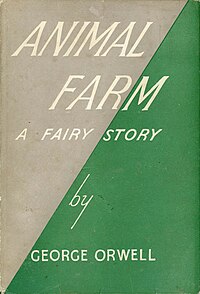
http://en.wikipedia.org/wiki/Animal_Farm
I visit Wikipedia and I edited out the Soviet stuff because many people - the younger generation do not know this history and I don't know it well myself, but the point is to adapt the info to our own corrupted, twisted, sad political, ecological environment and help people see what is happening.
We need to work fast here, with the election coming, we have to reach out to the kids. I call them kids because I am 53 and I am old to alot of you and you may not want to hear what I have to say. It is critical EVERYONE votes this time. We have to get rid of the old way of voting, that's the next step, but MOST IMPORTANT, Stephen Harper MUST NEVER be elected EVER EVER AGAIN! NEVER!
If we do not act, Canada will be destroyed as the one we know and love. It's beeing sliding down hill fast but we can turn it around. By going green and focusing on gardens- VICTORY GARDENS, composting, raising our own food and building shelters for everyone. No child should go hungry.
Anyways, here's what I got, this is from the book-wikipedia - the movie is a little different but we just need to re-write all the characters.
Okay here goes. Pigs Old Major-the inspiration that fuels the Rebellion in the book Napoleon-not much of a talker, but with a reputation for getting his own way. Napoleon is the main villain of Animal Farm Snowball -Napoleon's rival and original head of the farm after Jones' overthrow. Squealer-A small, white, fat porker who serves as Napoleon's right-trotter pig and minister of propaganda Minimus-A poetic pig who writes the second and third national anthems of Animal Farm after the singing of "Beasts of England" is banned. The Piglets -Hinted to be the children of Napoleon and are the first generation of animals subjugated to his idea of animal inequality. The young pigs- – Four pigs who complain about Napoleon's takeover of the farm but are quickly silenced and later executed Pinkeye – A minor pig who is mentioned only once; he is the pig that tastes Napoleon's food to make sure it is not poisoned, in response to rumours about an assassination attempt on Napoleon. Humans- Mr. Jones- The former owner of the farm, Jones is a very heavy drinker. The animals revolt against him after he drinks so much that he does not feed or take care of them. Mr Frederick -The tough owner of Pinchfield, a small but well-kept neighbouring farm, who briefly enters into an alliance with Napoleon. He is an allegory of Adolf Hitler Mr Pilkington – The easy-going but crafty and well-to-do owner of Foxwood, a large neighbouring farm overgrown with weeds Mr Whymper – A man hired by Napoleon to act as the liaison between Animal Farm and human society. At first he is used to acquire goods needed for the farm, such as dog biscuits and paraffin, but later he procures luxuries like alcohol for the pigs
Horses and donkeys Boxer – A loyal, kind, dedicated, hard working, and respectable cart-horse, although quite naive and gullible. Boxer does a large share of the physical labor on the farm, adhering to the simplistic belief that working harder will solve all the animal's problems. He has been described as "faithful and strong"; he believes any problem can be solved if he works harder. Mollie – A self-centered, self-indulgent and vain young white mare who quickly leaves for another farm after the revolution. Clover - A gentle, caring female horse, who shows concern especially for Boxer, who often pushes himself too hard. She seems to catch on to the sly tricks and schemes set up by Napoleon and Squealer. Benjamin – A donkey, one of the oldest, wisest animals on the farm, and one of the few who can read properly. He is skeptical, temperamental and cynical: his most frequent remark is, "Life will go on as it has always gone on—that is, badly.
Other animals Muriel – A wise old goat who is friends with all of the animals on the farm. She, like Benjamin and Snowball; is one of the few animals on the farm who can read.
The Puppies – Offspring of Jessie and Bluebell, taken away from them by Napoleon at birth and reared by Napoleon to be his security force.
Moses – The raven "was Mr. Jones's especial pet, was a spy and a tale-bearer, but he was also a clever talker." Initially following Mrs. Jones into exile, he reappears several years later and resumes his role of talking but not working. He regales Animal Farm's denizens with tales of a wondrous place beyond the clouds called "Sugarcandy Mountain, that happy country where we poor animals shall rest forever from our labours!"
The Sheep – They show limited understanding of the Animalism and the political atmosphere of the farm, yet nonetheless they blindly support Napoleon's ideals with vocal jingles during his speeches and meetings with Snowball.
The Hens – The hens are among the first to rebel against Napoleon.
The Cows – Their milk is stolen by the pigs, who learn to milk them. The milk is stirred into the pigs' mash every day, while the other animals are denied such luxuries.
The Cat – Never seen to carry out any work, the cat is absent for long periods, and is forgiven because her excuses are so convincing and she "purred so affectionately that it was impossible not to believe in her good intentions".[24] She has no interest in the politics of the farm, and the only time she is recorded as having participated in an election, she is found to have actually "voted on both sides".
The pigs Snowball, Napoleon, and Squealer adapt Old Major's ideas into "a complete system of thought", which they formally name Animalism,
Soon after, Napoleon and Squealer partake in activities associated with the humans (drinking alcohol, sleeping in beds, trading), which were explicitly prohibited by the Seven Commandments. Squealer is employed to alter the Seven Commandments to account for this humanisation
The original commandments are:
Whatever goes upon two legs is an enemy. Whatever goes upon four legs, or has wings, is a friend. No animal shall wear clothes. No animal shall sleep in a bed. No animal shall drink alcohol. No animal shall kill any other animal. All animals are equal.
Later, Napoleon and his pigs secretly revise some commandments to clear themselves of accusations of law-breaking. The changed commandments are as follows, with the changes bolded:
No animal shall sleep in a bed with sheets. No animal shall drink alcohol to excess. No animal shall kill any other animal without cause.
Eventually, these are replaced with the maxims, "All animals are equal, but some animals are more equal than others", and "Four legs good, two legs better!" as the pigs become more human. This is an ironic twist to the original purpose of the Seven Commandments, which were supposed to keep order within Animal Farm by uniting the animals together against the humans and preventing animals from following the humans' evil habits.
Through the revision of the commandments, Orwell demonstrates how simply political dogma can be turned into malleable propaganda.
We need to put some good music in it...maybe this? Pink Floyd's 1977 record album Animals was partially inspired by Animal Farm.[67] It categorises people as pigs, dogs, or sheep.
Pigs on the Wing (Part One) (Waters) 1:24
If you didn't care what happened to me, And I didn't care for you, We would zig zag our way through the boredom and pain Occasionally glancing up through the rain. Wondering which of the buggars to blame And watching for pigs on the wing.
---------------------------------------------------------- Pigs (Three Different Ones) (Waters) 11:26
Big man, pig man, ha ha charade you are. You well heeled big wheel, ha ha charade you are. And when your hand is on your heart, You're nearly a good laugh, Almost a joker, With your head down in the pig bin, Saying "Keep on digging." Pig stain on your fat chin. What do you hope to find. When you're down in the pig mine. You're nearly a laugh, You're nearly a laugh But you're really a cry.
You know that I care what happens to you, And I know that you care for me. So I don't feel alone, Or the weight of the stone, Now that I've found somewhere safe To bury my bone. And any fool knows a dog needs a home, A shelter from pigs on the wing.
Wish I had more time to watch but I have homework.
Heard some interesting perspective from real people. I didn't know it was like that...I never thought to much about it. :(
Sad! I'm saying a prayer for everyone there.
But it will be interesting to see how this interactive documentary turns out. Who else will adapt this idea to their town. What world issues could be solved by similar experiments. Could great things be learned and come out of this project.
Love what this guy, Dave Meslin, has to say. So very true. People do want to make changes but our system is set up to make us fail. Let's re-define, re-arrange, change things so that people can get involved and really make a difference in their communities. Hopefully by watching this video and addressing the issue front and center something will start to happen. http://www.ted.com/speakers/dave_meslin.html
Local politics -- schools, zoning, council elections --
hit us where we live. So why don't more of us actually get involved? Is
it apathy? Dave Meslin says no. He identifies 7 barriers that keep us
from taking part in our communities, even when we truly care.
(Filmed at TEDxToronto.)
Dave Meslin is a "professional rabble-rouser." Based in Toronto,
he works to make local issues engaging and even fun to get involved in. http://www.ted.com/speakers/dave_meslin.html
"For those who know Meslin, the real question is whether or not he will ever run for mayor. “I don’t think so,” he says. “Maybe for councillor, but I wouldn’t run under our current voting system. … For now, I’m getting more accomplished outside of City Hall than I could from within, and I’m having more fun.”"
National Post