Showing posts with label displacement. Show all posts

Wednesday, October 22, 2025

Alaska Villages Flooded by Unprecedented Typhoon

 πŸŒŠ Alaska Villages Flooded by Unprecedented Typhoon: Climate Change & Displacement Collide 🌎

Last weekend, western Alaska faced a storm unlike anything residents had ever seen. The remnants of Typhoon Halong brought record-high water to remote Alaska Native villages, devastating communities, displacing hundreds, and claiming lives. For families in Kipnuk and Kwigillingok, the flooding was more than a natural disaster—it was a harsh reminder of the compounded challenges of climate change, historical displacement, and loss of traditional ways of living. πŸ’”

Alexie Stone, a resident of Kipnuk, described the chaos vividly. From a single dry room, he could see waves smashing against homes 🌊 and sheds drifting like ships past windows 🏠. His own house floated off its foundation but was stopped just in time by another building. Despite narrowly avoiding further destruction, the house—and many others—became uninhabitable ❌. Across the region, over 1,000 residents had to be evacuated, leaving behind homes, belongings, and winter food supplies like halibut, salmon, moose, and goose 🐟🦌πŸͺΆ.

The scale of the disaster is staggering:

  • Kipnuk, a village of about 700 people, lost 121 homes 🏚️.
  • Kwigillingok lost three dozen homes 🏠 swept away by floodwaters.
  • Floodwaters rose more than six feet above the highest normal tide line πŸ“.

Infrastructure was heavily damaged:

  • Water, sewer, and well systems failed 🚱
  • Fuel tanks leaked, spreading a pungent petroleum odor ⛽
  • Entire landscapes of lives disrupted πŸ’”

Evacuations were massive. Residents were flown first to Bethel ✈️ and then onward to Anchorage, 500 miles away. Military transport planes carried hundreds, while the Red Cross and local authorities provided shelter in arenas, convention centers, and recreation facilities 🏟️πŸ›️. Amid the chaos, villagers demonstrated remarkable resilience, helping one another, salvaging belongings, and maintaining a sense of community πŸ’ͺ❤️.

Yet, as a young local woman pointed out, many of these families are not even supposed to be living in these flood-prone areas ⚠️. Over decades, Indigenous communities have been forced into locations that disrupt traditional ways of life, through government policies, relocations, and land pressures πŸ›‘. The very homes and neighborhoods now under water were chosen out of necessity, not desire. With the storm, these communities have lost not only property but also ancestral lands, hunting grounds, and cultural practices vital to their identity 🏹🌿πŸͺΆ. This disaster is layered—environmental, social, and historical.

This event also underscores the impact of climate change 🌑️πŸ”₯. Typhoons and tropical storm remnants rarely, if ever, reached western Alaska before. Their appearance signals a shifting climate and increasing extreme weather events worldwide. Alaska’s Indigenous communities, already marginalized and displaced, are now on the frontlines of climate upheaval 🌎⚡.

The situation also highlights systemic vulnerabilities. Federal funding meant to help small Indigenous villages prepare for disasters has been cut πŸ’Έ❌. For example, a $20 million EPA grant intended to protect Kipnuk from flooding and erosion was terminated. Without these protections, communities remain exposed to hazards they did not choose 🚨.

Despite the challenges, Alaska Native communities continue to show extraordinary strength πŸ’ͺ✨. Residents like Alexie Stone are determined to rebuild—repairing boardwalks, salvaging belongings, and supporting neighbors 🀝❤️. Yet the question looms: how long can communities repeatedly recover from disasters that are only intensifying, and how much support will they receive from outside institutions? πŸ€”

This flood is a stark warning ⚠️. It reminds us that climate change is real, its impacts are accelerating, and those most vulnerable are often least responsible πŸŒπŸ’”. It’s also a call to honor the rights, traditions, and lands of Indigenous peoples, who have already endured centuries of displacement and marginalization ✊πŸͺΆ.

For the people of Kipnuk, Kwigillingok, and other affected villages, rebuilding is not just about homes—it is about survival, identity, and reclaiming a way of life 🏠❤️🌿. Their resilience is inspiring, but it should also be a call for broader society to recognize the intertwined forces of climate change, displacement, and injustice—and act before more communities face similar fates 🌎πŸ”₯πŸ’”.


Tuesday, March 11, 2025

No Recourse

 No Recourse: How Systemic Racism in BC Has Left Indigenous and Homeless Communities Defenseless

Vancouver’s latest attempt to remove Indigenous people from the Downtown Eastside (DTES) is not an isolated incident—it is part of a long, racist pattern enabled by government policies that provide no recourse for those affected. This is not just about Mayor Ken Sim’s leaked memo; it’s about how governments at every level have ensured that marginalized people—especially Indigenous communities—have no way to fight back.

The Dismantling of the BC Human Rights Commission

One of the biggest blows to justice in BC happened in 2002, when Premier Gordon Campbell dismantled the BC Human Rights Commission. Before this, the Commission had the power to investigate systemic discrimination and hold governments accountable for policies that disproportionately harmed marginalized groups.

  • Without a Human Rights Commission, Indigenous and homeless people had no independent body to challenge discriminatory policies like forced removals, housing barriers, and racist policing.
  • BC was the only province in Canada without a Human Rights Commission for nearly 15 years, until it was finally reinstated in 2019—but by then, the damage was done.
  • In the meantime, governments, corporations, and police forces acted with impunity, pushing policies that disproportionately harmed Indigenous people.

COVID-19: Displacement and Death in a “Health Crisis”

When COVID-19 hit, the government had an opportunity to finally address homelessness and housing insecurity. Instead, they did the opposite.

  • Encampment Evictions: Homeless encampments in Vancouver and Victoria were forcefully dismantled under the guise of “public health” while offering no real alternatives for housing.
  • Selective Support: The government rushed to house middle-class people returning from vacations but left homeless and Indigenous people to die in the streets.
  • Overdose Crisis Ignored: While COVID-19 funding poured in, the opioid crisis—which kills mostly Indigenous and poor people—was treated as an afterthought.

COVID revealed what we already knew: homeless lives are disposable to the government.

Ukraine Refugees: Housing for Some, Nothing for Others

In 2022, Canada opened its doors to Ukrainian refugees—offering them expedited visas, financial support, and housing assistance that homeless Canadians had never received.

  • Airbnbs and Hotels Opened Up: While BC’s homeless population was told there was “no available housing,” Airbnb hosts and hotels quickly found space for Ukrainian refugees.
  • Government Assistance Flowed Freely: While people in the DTES died in tents, Ukrainians arriving in Canada received housing subsidies, job placement programs, and emergency benefits.
  • BC Housing Remained Useless: The very agency meant to address housing—BC Housing—was completely absent in supporting local homeless populations.

Let’s be clear: refugees deserve support. But the way Canada selectively provides housing, based on race and nationality, exposes its deep-rooted racism. Indigenous people, whose land this is, are still homeless in their own country.

Canada Mortgage and Housing Corporation (CMHC): A System Built for White Soldiers, Not for Everyone

When Canada Mortgage and Housing Corporation (CMHC) was created in 1946, it wasn’t meant for everyone.

  • It was designed to help returning white soldiers find homes after WWII—not Indigenous people, not racialized communities, and certainly not the poor.
  • Over the decades, CMHC policies have helped middle-class and wealthy homeowners while failing to support low-income renters or the homeless.
  • The federal government gutted funding for social housing in the 1990s, leaving provinces like BC to pick up the slack—and they failed miserably.

BC Housing: A Bureaucratic Failure

BC Housing, the provincial agency responsible for affordable housing, is a disaster.

  • Millions in funding go to administrative costs, not real housing solutions.
  • The waitlist for social housing is years long, leaving people on the streets.
  • It prioritizes "low-cost market housing" over actually helping the homeless.

Meanwhile, the government has no problem giving tax breaks to real estate developers and Airbnb owners—proving that they care more about profits than people.

Where Do We Go From Here?

  1. Reinstate a powerful, independent BC Human Rights Commission that can investigate racist housing policies and hold governments accountable.
  2. Ban Airbnb-style rentals that take away housing stock while people die on the streets.
  3. Demand real funding for Indigenous-led housing initiatives, instead of giving money to bureaucratic agencies that do nothing.
  4. Call out the hypocrisy—when the government says there’s “no housing,” yet thousands of refugees find homes overnight, we need to ask why.

Final Thought: The Cycle of Racism Must End

From Gordon Campbell’s dismantling of human rights protections, to COVID-19 neglect, to the selective housing of Ukrainian refugees, we see the same story repeated:

  • The government finds housing when it wants to.
  • It makes excuses when it doesn’t.
  • Indigenous and homeless lives remain at the bottom of their priorities.

It’s time to break this cycle—because housing isn’t just about policy, it’s about who the government believes deserves to live.

Wednesday, May 18, 2016

Melting Glaciers


 From Wikipedia

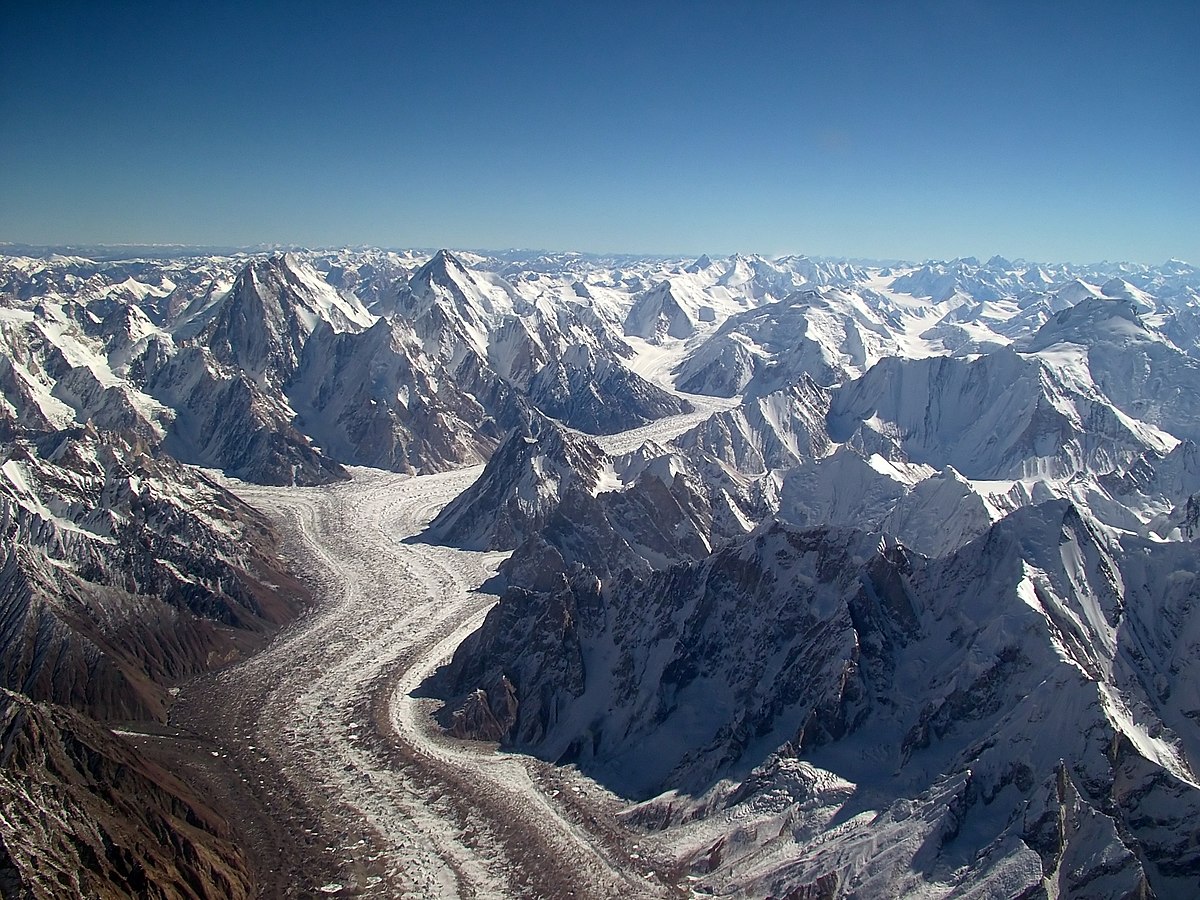
On Earth, 99% of glacial ice is contained within vast ice sheets in the polar regions, but glaciers may be found in mountain ranges on every continent except Australia, and on a few high-latitude oceanic islands. Between 35°N and 35°S, glaciers occur only in the Himalayas, Andes, Rocky Mountains, a few high mountains in East Africa, Mexico, New Guinea and on Zard Kuh in Iran.[1] Glaciers cover about 10 percent of Earth's land surface.

Glacial ice is the largest reservoir of freshwater on Earth.[3] Many glaciers from temperate, alpine and seasonal polar climates store water as ice during the colder seasons and release it later in the form of meltwater as warmer summer temperatures cause the glacier to melt, creating a water source that is especially important for plants, animals and human uses when other sources may be scant. Within high altitude and Antarctic environments, the seasonal temperature difference is often not sufficient to release meltwater.

Because glacial mass is affected by long-term climactic changes, e.g., precipitation, mean temperature, and cloud cover, glacial mass changes are considered among the most sensitive indicators of climate change and are a major source of variations in sea level.
Read more here https://en.wikipedia.org/wiki/Glacier

The Baltoro Glacier from the air, surrounded by the mountains of the Karakoram |Source=[http://www.flickr.com/photos/22539273@N00/55896170/ Glacier] |Date=October 23, 2005 at 10:00 |Auth


Why does it matter?

As glaciers and the giant ice sheets on Greenland and Antarctica melt, they add more water into the ocean, which causes sea level to rise.

Check out the effects of melting glaciers on coastal areas. Read more here