Showing posts with label british columbia. Show all posts

Friday, July 24, 2026

When Wildfires Hundreds of Kilometres Away Can Turn Out the Lights

 When Wildfires 🔥Hundreds of Kilometres Away Can Turn Out the Lights

Most of us think of power outages as something caused by a storm in our own neighbourhood. A fallen tree. Heavy snow. High winds.

But this week, BC Hydro reminded us that our electrical system is far more connected than many people realize.

Wildfires burning near Clinton are threatening the Kelly Lake 500 kV substation and major transmission lines that carry hydroelectric power from northern British Columbia to the Lower Mainland and Vancouver Island. Even though the fires are nowhere near Vancouver, people here could still experience flickering lights, brief power interruptions, or voltage fluctuations.

It's a powerful reminder that our infrastructure is only as strong as its weakest link.

Climate change isn't just about hotter summers or smoky skies anymore. It affects transportation, food production, drinking water, communications, and the electricity we rely on every single day.

As wildfire seasons become longer and more intense, these kinds of disruptions may become more common. We often think of the electrical grid as something invisible—something that simply works. Until it doesn't.

This is why protecting forests, investing in resilient infrastructure, and preparing for emergencies matter. Having a flashlight, keeping your phone charged, storing a few days of water and food, and thinking ahead isn't being alarmist—it's being prepared.

Nature is reminding us that everything is connected.

The electricity powering a light in Vancouver may begin its journey hundreds of kilometres away. A wildfire in the Interior can affect homes on the coast. Smoke from one region can blanket another.

Our province is connected by rivers, forests, transmission lines, and communities.

Perhaps it's time we started thinking that way too.

Stay safe, stay informed, and take care of one another.

Reflective Questions

1. How prepared is your household for an unexpected power outage?

2. Have we become too dependent on electricity without realizing it?

3. What surprised you most about a wildfire affecting power hundreds of kilometres away?

4. How should governments balance wildfire prevention with infrastructure protection?

5. What can communities do to become more resilient during climate-related emergencies?

6. How has climate change changed the way you think about everyday life?

7. Should critical infrastructure be redesigned to better withstand extreme weather?

8. What role do individuals play in preparing for emergencies?

9. How can we better protect both our forests and the essential services they support?

10. What lessons should British Columbia learn from this wildfire season?

#BritishColumbia #Vancouver #BCHydro #Wildfires #PowerOutage #ClimateChange #EmergencyPreparedness #Infrastructure #Resilience #StayPrepared


Tuesday, June 23, 2026

The Giants of the Fraser: Why Are We Catching Ancient Sturgeon?


The Giants of the Fraser: Why Are We Catching Ancient Sturgeon?

By Tina Winterlik aka Zipolita

Growing up near the Fraser River, I always knew there were giant sturgeon living beneath the surface. They seemed almost mythical—creatures from another time that had somehow survived into the modern world.

One memory has stayed with me for decades. Someone called my father's tow truck company because a massive sturgeon needed to be moved. I was young and don't remember all the details, but I remember the sense of awe. This wasn't just a fish. It was something extraordinary.

Recently, I read an article about a gigantic white sturgeon that reportedly needed two tape measures to determine its length. According to the story, had it been weighed, it might have shattered existing records. The fish was released alive, and many celebrated the catch.

But I found myself asking a different question:

Why are we catching these ancient giants at all?

White sturgeon have existed in forms similar to today for millions of years. They survived ice ages, floods, predators, industrial development, pollution, and dramatic changes to our rivers. Some live for more than a century. A fish caught today may have been swimming in the Fraser River before many of our grandparents were born.

Supporters of catch-and-release sturgeon fishing argue that it contributes to conservation. Anglers help fund research, fish are tagged and monitored, and guides depend on the industry for their livelihoods. These are important points and deserve consideration.

Yet another perspective exists.

What does the fish gain from being caught, handled, measured, photographed, and released?

If these animals are truly rare, vulnerable, and ancient, should recreation be part of their story?

In recent years, social media has encouraged people to seek bigger catches, bigger photos, and bigger stories. Sometimes I wonder whether we are celebrating the fish or celebrating ourselves.

There is also a deeper question about our relationship with nature.

Do we value wildlife because it entertains us? Because it generates tourism revenue? Because it provides content for social media?

Or do we value it simply because it has a right to exist?

The Fraser River sturgeon are part of British Columbia's natural heritage. They are survivors from another age. Living fossils. Witnesses to history.

Imagine being over 100 years old. You survive countless challenges, only to be repeatedly caught so that humans can take photographs beside you.

Would we consider that respect?

I don't claim to have all the answers. Conservation is complicated, and reasonable people can disagree. But perhaps it is time to have a broader conversation about how we treat these remarkable creatures.

Because once they are gone, no amount of photographs, measurements, or world records will bring them back.

Perhaps the greatest trophy is not catching the largest sturgeon.

Perhaps it is ensuring that future generations can still find them swimming free in the Fraser River.


Reflective Questions

Should catch-and-release fishing be allowed for ancient species such as sturgeon?

What responsibilities do humans have toward wildlife that can live longer than many people?

Does conservation justify recreational fishing of vulnerable species?

How has social media changed the way we interact with nature?

What does it mean to respect wildlife?

Are there better ways to support conservation than catching and releasing animals?

How can future generations benefit from protecting sturgeon today?

Should some species be completely off-limits to recreational fishing?


#FraserRiver #WhiteSturgeon #BritishColumbia #Conservation #WildlifeProtection #CatchAndRelease #NatureEthics #ProtectWildlife #EnvironmentalAwareness #Zipolita #DigitalHorizonZ #LivingFossils #SaveOurRivers #BCWildlife 

Monday, June 22, 2026

That question—"What if we had acted sooner?"

 Looking at all the boarded-up windows and murals that appeared during and after COVID, I can't help wondering: what if we had focused just as much energy on housing, mental health supports, addiction treatment, and poverty prevention years earlier?

The province is now investing millions to deal with repeat property offenders. Yet many of these individuals are also struggling with housing instability, mental health challenges, and substance use.

Businesses deserve protection. Communities deserve safety.

But if we only focus on the consequences and not the causes, are we really solving the problem?

The fentanyl crisis was declared a public health emergency in B.C. back in 2016. Ten years later, many communities are still struggling with the same issues.

What do you think would have made the biggest difference: more enforcement, more prevention, or a better balance of both?

Are we spending enough on prevention, or are we mostly paying for the consequences?


Reflective Questions

1. What do you believe is the main cause of increasing street disorder in many B.C. communities?

2. Could earlier investments in affordable housing and mental health services have prevented some of today's challenges? Why or why not?

3. How should governments balance public safety with compassion for people experiencing addiction, homelessness, or mental illness?

4. Do you think enforcement alone can reduce property crime? Explain your answer.

5. What impact do repeated thefts and vandalism have on small business owners and their employees?

6. Why do some people become trapped in cycles of poverty, addiction, and criminal activity?

7. What role should communities play in supporting vulnerable individuals before they reach a crisis point?

8. How might the fentanyl crisis have changed if more treatment and recovery services had been available ten years ago?

9. What lessons should governments learn from the social challenges that became more visible during COVID-19?

10. If you were responsible for spending $16 million to address street disorder, how would you allocate the funds?


#BritishColumbia

#BCPolitics

#HousingCrisis

#MentalHealthMatters

#FentanylCrisis

#CommunitySafety

#AffordableHousing

#AddictionRecovery

#SmallBusiness

#SocialIssues

#StreetDisorder

#CrimePrevention

#PublicSafety

#PovertyAwareness

#SupportNotStigma


Wednesday, May 27, 2026

To Premier Wab Kinew,

 To Premier Wab Kinew,

I want to share something honestly and respectfully.

I have been trying to understand my own roots and history, and through that process I’ve come to care deeply about protecting land, water, and future generations. These issues are not abstract for me — they feel urgent and personal.

So when I hear support for pipeline expansion into or through British Columbia, I feel confusion and disappointment.

I don’t see this as a simple or emotional reaction. I understand that leaders operate within economic pressures, federal-provincial negotiations, and competing priorities. But I am struggling to understand how this aligns with the climate reality we are living in — wildfires, floods, displacement, and increasing instability.

My questions are not meant as attacks, but as attempts to understand:

  • How does this direction align with climate science and long-term environmental protection?
  • How are communities that oppose these projects being included in decision-making?
  • What does reconciliation mean when there is disagreement about land and resource use?
  • How do we balance economic needs with the responsibility to future generations?

I am sharing this because many people feel a similar tension — between wanting stability and jobs, and wanting a livable future.

I am still trying to understand how these can be reconciled without continuing an extractive model that many of us are worried about.

Thank you for hearing these questions.


#NoNewPipelines, #ProtectTheLand, #IndigenousRights, #KeepItInTheGround, #ClimateCrisis, #WaterIsLife, #FutureGenerations, #GreenEnergyNow, #EnvironmentalProtection

Saturday, May 23, 2026

Fear, Division, and the Future of British Columbia: Are We Being Manipulated?

 Fear, Division, and the Future of British Columbia: Are We Being Manipulated?

Lately I’ve been thinking a lot about fear in politics.

Why are so many politicians trying to make people angry at each other instead of helping solve problems?

Pierre Poilievre talks a lot about protecting people, but who is really being protected when fear and division become the main political strategy?

When people are scared about housing, jobs, food prices, or the future of their children, they are vulnerable. That fear can easily be redirected toward other groups: Indigenous communities. Immigrants. Environmental advocates. People living in cities. People living in poverty. Anyone presented as “the problem.”

But are ordinary Canadians really each other’s enemies?

Why does politics increasingly feel like rage, blame, and endless conflict?

Why are we seeing more “us versus them” messaging in Canada?

And why does so much of it sound similar to the style used by Donald Trump in the United States?

Strong communities are not built through fear-mongering. Strong communities are built through trust, compassion, critical thinking, and honesty.

We should ask ourselves: Who benefits when neighbours turn against each other? Who profits from outrage and division? Who gains power when people stop trusting science, journalism, education, or democratic institutions? Who benefits when people are too angry and exhausted to think clearly?

British Columbia is already facing enormous challenges: housing insecurity, climate disasters, healthcare strain, toxic drug deaths, economic anxiety, and growing inequality.

Do we really need more division added to that?

Or do we need leaders who calm tensions instead of inflaming them?

Protecting our families also means protecting them from manipulation, propaganda, and fear-driven politics.

It means teaching our children to ask questions. To think critically. To verify information. To care about truth. And to remember that democracy becomes fragile when people stop listening to each other.

Fear is powerful. But so is empathy. So is community. So is courage. And so is refusing to be manipulated by anger.

Maybe the real question is: What kind of Canada — and what kind of British Columbia — do we want to leave behind for the next generation?


#BritishColumbia #CanadaPolitics #CriticalThinking #FearPolitics #Democracy #TruthMatters #StopTheDivision #IndigenousRights #ProtectOurCommunities #PoliticalAwareness #ThinkForYourself #SocialJustice #HousingCrisis #Canada #BCPolitics

Thursday, September 4, 2025

Wildfire Smoke Across BC: What You Need to Know

🌫️ Wildfire Smoke Across BC: What You Need to Know

If you’ve been noticing hazy skies in Vancouver—or in places like Nelson—you’re not imagining it. Wildfire smoke is spreading across British Columbia, affecting air quality and visibility. This is becoming a serious concern, especially for vulnerable populations such as children, seniors, and those with respiratory conditions.

🛰️ Seeing the Smoke from Space

Thanks to modern satellite technology, you can actually see the smoke moving across BC and beyond. Here are some reliable tools:

  • Zoom Earth – Live satellite imagery with wildfire hotspots updated every 10 minutes. Great for tracking smoke in real time.
  • NASA Earth Observatory – High-resolution images showing smoke drifting across the Pacific.
  • CIRA Satellite Library – Detailed views of wildfires, including smoke dispersion and pyroCb clouds.

📡 Forecasts & Alerts

If you want to plan your day around the smoke or monitor long-term trends:

🏠 Protecting Yourself

Smoke can irritate your eyes, lungs, and overall health. Here’s what you can do:

  • Limit outdoor activities, especially strenuous exercise.
  • Stay indoors with windows and doors closed.
  • Use air purifiers with HEPA filters if possible.
  • Wear N95 or equivalent masks if you must go outside.
  • Stay hydrated and watch for symptoms like chest discomfort or severe coughing.

⚠️ Stay Informed

  • Check Zoom Earth for real-time smoke movement.
  • Review FireSmoke.ca forecasts daily.
  • Monitor alerts from Environment Canada and CWFIS.

Wildfire smoke is a reality in BC’s summer months, and being informed is the best way to stay safe. Keep an eye on the skies, track the smoke online, and take precautions to protect your health.

Friday, May 16, 2025

How the Royal Legacy Impacted Indigenous Families


From Queen Victoria to Residential Schools: How the Royal Legacy Impacted Indigenous Families

Did Queen Victoria ever visit British Columbia?
The answer is no — Queen Victoria never set foot in what is now Canada. Yet, her name is everywhere: British Columbia, Victoria (the capital city), schools, parks, and public buildings. She ruled during a period when the British Empire rapidly expanded, including deep into Indigenous lands across Turtle Island (North America).

But if she didn’t come here… who did? And how does her family tie into what happened to Indigenous children?


The Royal Web: How Queen Victoria’s Legacy Shaped Canada

Queen Victoria (1819–1901)

  • Reigned during the establishment of colonial British Columbia (1858).
  • Her government oversaw policies that enabled the dispossession of Indigenous lands, the Indian Act, and laid the groundwork for the residential school system.
  • While she may not have signed every policy herself, the Crown’s authority under her name was used to enforce them.

Key Members of Her Family & Their Role in Canadian History

Prince Arthur (Duke of Connaught) — Her Son

  • Governor General of Canada (1911–1916).
  • Symbolized Crown authority; visited Indigenous communities ceremonially.

King Edward VII — Her Son

  • Continued Victoria’s imperial legacy.
  • His reign coincided with increasing enforcement of assimilation policies.

King George V — Her Grandson

  • Oversaw the height of residential school expansion.
  • Canadian policies under his reign continued to strip Indigenous rights and identities.

King George VI — Her Great-Grandson

  • Visited Canada in 1939.
  • His time saw Canada’s wartime unification but colonial policies remained intact.

Queen Elizabeth II — Her Great-Great-Granddaughter

  • Longest-reigning monarch until 2022.
  • Represented Canada’s head of state throughout decades of survivor testimony, hearings, and truths emerging around residential schools.

Why This Matters

This isn’t just history — the legacy of Queen Victoria and her descendants is deeply tied to how land was claimed and governed in Canada. The systems put in place under her reign and continued by her family caused real harm to Indigenous families — especially through the removal of children, their placement in residential schools, and the attempt to erase Indigenous languages and culture.


Take Time to Learn

If you live on this land — whether it’s called British Columbia, Turtle Island, or another name — take the time to learn about the real history of how it came to be under colonial rule.


Land Acknowledgment

We acknowledge that this post was written on the unceded, ancestral, and occupied territories of the Coast Salish peoples, including the Musqueam, Squamish, and Tsleil-Waututh Nations. We honour the Indigenous peoples of these lands and their ongoing connection to land, culture, and community.

Learning history means listening to Indigenous voices — past and present.


Thursday, March 20, 2025

HBC in BC History

 AI helping me

The Indigenous perspective on the Hudson’s Bay Company (HBC) in British Columbia is deeply rooted in the history of colonialism, displacement, and economic exploitation. While some Indigenous nations engaged in trade with HBC and adapted to new materials and technologies, the long-term impact of the company's presence was largely destructive to Indigenous ways of life, sovereignty, and well-being.

HBC and the Fur Trade: Economic Exploitation

From the late 1700s to the mid-1800s, HBC trading posts in BC—such as Fort Langley (1827), Fort Victoria (1843), and Fort Kamloops (1812)—became central to the fur trade economy. Indigenous communities, including the Coast Salish, Nuu-chah-nulth, and Interior Nations, initially engaged in trade as an extension of their own economies, exchanging furs for metal tools, guns, blankets, and other goods.

However, HBC's monopoly over trade resulted in economic dependency. Traditional Indigenous economies, which had been based on subsistence and sustainable trade networks, were disrupted. Overhunting led to the depletion of beaver and other fur-bearing animals, and by the mid-19th century, Indigenous trappers were forced into wage labor or reliance on HBC stores for survival.

Disease, Smallpox, and Population Collapse

The introduction of European diseases, especially smallpox, had a catastrophic impact on Indigenous nations. The most devastating outbreak in BC occurred in 1862, wiping out an estimated 60–90% of some Indigenous populations. Oral histories and some historical records suggest that HBC traders and settlers were complicit in knowingly spreading disease. While direct evidence of HBC distributing infected blankets is debated, the company benefited from Indigenous depopulation, as it facilitated colonial expansion and land acquisition for British settlers.

Land Theft and Dispossession

HBC was instrumental in facilitating the British Crown's claim over Indigenous lands in BC. The company held immense power, acting not just as a business but as a governing force. When the British government established the Colony of British Columbia in 1858, HBC’s trading posts became colonial administrative centers, reinforcing European land claims. The creation of reserves and the denial of Indigenous land rights can be traced, in part, to the economic and political structures HBC helped establish.

For example, Fort Victoria, originally an HBC outpost, became the center of British colonial rule on Vancouver Island. The Douglas Treaties (1850–1854) were signed with some Indigenous groups under coercive and misleading terms, securing land for settler development while promising hunting and fishing rights that were later ignored.

HBC Blankets: A Symbol of Trade and Trauma

HBC’s multi-stripe wool blanket is an iconic product, but its legacy is deeply tied to Indigenous suffering. While many Indigenous nations traded for these blankets, and they became part of cultural and ceremonial practices, they are also associated with smallpox and colonial trade exploitation. Today, some Indigenous artists and activists reclaim HBC blankets as a form of resistance, incorporating them into art that critiques colonial history.

Modern Indigenous Perspectives and Resistance

Today, many Indigenous scholars and activists view HBC as a symbol of colonial oppression. The sale of the downtown Vancouver HBC store to an Indigenous-led development group was seen as a moment of reclamation, highlighting the resilience of Indigenous governance. However, there is still deep frustration over how HBC and other colonial institutions have profited from Indigenous lands and labor while offering little in return.


Sunday, September 18, 2016

Link Arms- #FishFarmsGetOut-Cleansing Our Waters


From the https://www.facebook.com/fishfarmsgetout/?hc_ref=NEWSFEED&fref=nf
Our Leaders Have Spoken. The authority of the Musgamagw Dzawada'enuxw people comes from 13000+ years of having a respectful relationship with our lands and waters. When we say our waters are hurting because of fish farms, they are. It's time for BC and Canada to listen now. Thank you to all who came out to support us at our rallies in Victoria and Vancouver. You are linking arms with us as we protect our sacred way of life, Gilakasla! Thank you to Tamo Campos for creating this video that mirrors our strength back at us and gives us courage! This is only the beginning. Stay tuned for news of further action we are planning to take

#FishFarmsGetOut

Website: cleansingourwaters.com

Facebook Page: Musgamagw Dzawada'enuxw Cleansing Our Waters

Twitter: fishfarmsgetout  @fishfarmsout

Instagram: cleansingourwaters

http://www.seashepherd.org/

https://www.voyageforsalmon.ca/

Watch More Videos here.

#ProtectorsNotProtestors

No More Fish Farms! Stop The Genocide! 


EVICTION PARTY VIDEOS- #FishFarmsGetOut #Vancouver  


#FishFarmsGetOut- Pt 1 - Solidarity Rally - Van Art Gallery 


#FishFarmsGetOut- Pt 2 - Solidarity Rally - Van Art Gallery 


#FishFarmsGetOut- Pt 3 - Solidarity Rally - Van Art Gallery  

https://www.facebook.com/fishfarmsgetout/

https://www.facebook.com/fishfarmsgetout/
Yvette John- https://www.facebook.com/fishfarmsgetout/
https://www.facebook.com/fishfarmsgetout/


Monday, August 15, 2016

Jack Woodward-Aboriginal Title Rights


Published on Jun 27, 2014

Jack Woodward interview on Tsilhqot'in circumstances from 2007 basic to this week's (June 2014) Supreme Court decision, by Damien Gillis.

Related Link:

You Must Hear Sharon Venne Speak!!

https://tinawinterlik.blogspot.ca/2016/04/you-must-hear-sharon-venne-speak.html

Wednesday, July 20, 2016

Watch this Beautiful film- Keepers of the Coast

I want to go live up there and live like this!!

Keepers of the Coast from Aaron Heidt on Vimeo.

Keepers of the Coast takes a close look at how the Kitasoo/Xai'Xais, Heiltsuk, Nuxalk, and Wuikinuxv Nations are stewarding our marine territories.

The central coast of British Columbia is one of the most spectacular and biologically rich places left on the planet – where ancient temperate rainforest intertwines with the living Pacific. The Heiltsuk, Kitasoo/Xai'Xais, Nuxalk and Wuikinuxv who have inhabited the central coast for thousands of years have joined forces, forming the Central Coast Indigenous Resource Alliance, otherwise known as CCIRA.

Using a combination of traditional knowledge and science, the nations are committed to upholding their indigenous laws and stewarding these marine resources in a manner that sustains their cultures and ensures intact ecosystems, healthy communities and local sustainable economies, now and into the future.

Cast: Aaron Heidt and Twyla Roscovich

Tags: central coast, indigenous, resource, alliance, first nations, british columbia, ccira and twyla roscovich

Check out the Photo Gallery
http://ccira.ca/site/Photo-Gallery.html
http://ccira.ca/site/communities.html

 http://ccira.ca/

 http://ccira.ca

Central Coast Indigenous Resource Alliance

2790 Vargo Rd., Campbell River, BC V9W 4X1
email: info@ccira.ca


Photo Credit: Doug Neasloss


http://www.callingfromthecoast.com/


CoastCast.ca is a new online video series produced to educate the public about the ecology, people, stories and issues of the BC coast.

http://www.coastcast.ca/


Twyla Roscovich

Twyla Roscovich is an independent BC documentary filmmaker and underwater cinematographer who lives & works aboard her sailboat part-time making marine ecology films on the coast. She has worked as a director and cinematographer for the BBC Natural History Unit, A&E, and Discovery Channel. She now writes, shoots, edits and narrates her own productions which can be viewed HERE.


Paul Ross

Paul Ross is a skipper, outdoorsman, and diver with an abiding passion for cultures, the environment, and social justice. He has traveled extensively worldwide and is fluent in Spanish & French. He has worked as a skipper/guide for research crews, film crews and dive/sail expeditions in Guatemala, Belize, Honduras and British Columbia. Paul has over 20,000 nautical miles logged as a skipper.

 https://www.facebook.com/CoastCast/


Coastal Tipline

CoastCast relies on the people who are out on the water witnessing events. If you see or know of something newsworthy or interesting happening out on the coast, please call and we may be able to travel there to cover it. Contact us here to send us a newstip or story

Thursday, January 7, 2016

Lelu Island Fundraiser- KITSILANO- Patagonia-Luke Wallace-


--This event is taking place on unceded Coast Salish Territory--


 Come join Luke Wallace and friends for their first performance of 2016 at a fundraiser concert for Lelu Island. 
https://www.facebook.com/events/712884822181873/ 

at 7 PM - 10 PM
1994 West 4th Avenue - Patagonia Vancouver


 SHARE AND BE THERE! 
Help Stop This!! Save Lelu! #SaveOurCoast

 Come join Luke Wallace and friends for their first performance of 2016 at a fundraiser concert for Lelu Island. 
https://www.facebook.com/events/712884822181873/


The night will consist of musicial performances, a short information section and silent auction with all the proceeds going to support frontline efforts on Lelu Island (information below).

7pm-9pm. Admission by donation, no one gets turned away for lack of funds. Patagonia is at 1994 W 4th Ave. It is wheel chair accessible. There will be a silent auction, snacks and beer from Persephone Brewing Company!

Lelu Island can be found in the estuary of the Skeena River near Port Edward, British Columbia. In 2014, the Lax Kw'alaams community began construcing a camp on the island to stop the construction of a Petronas-led LNG terminal and pipeline. The Lax Kw'alaams community and their allies are working through the winter to ensure that the area remains pipeline free and to protect the incredibily rich Skeena River salmon population. Much more information about the impacts of the LNG terminal and Lelu island will be shared on the night of the fundraiser concert.

Follow the camp's facebook page here: Stop Pacific NorthWest LNG/Petronas on Lelu Island

Luke Wallace - http://www.lukewallacemusic.com/


http://tinawinterlik.blogspot.ca/2015/11/help-save-lelu-island-please-sign.html


Saturday, September 19, 2015

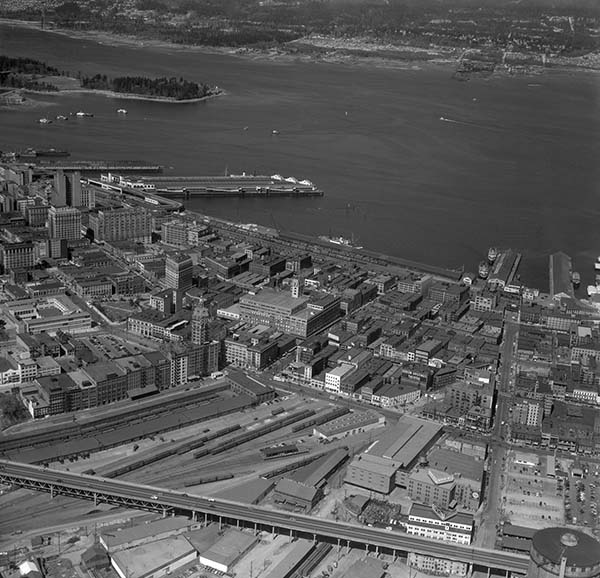
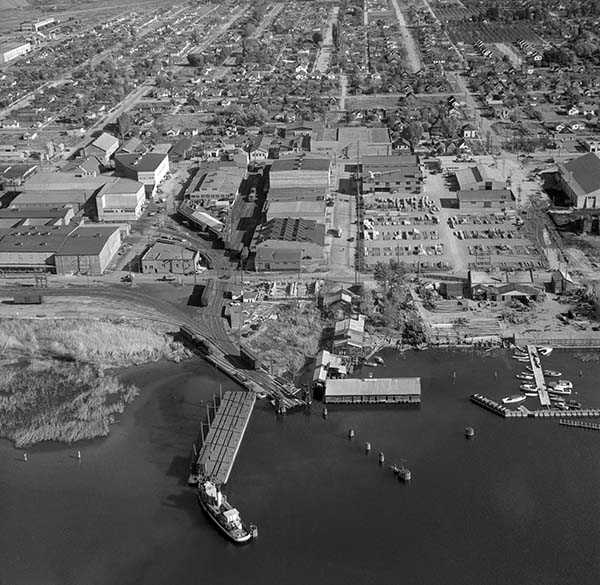
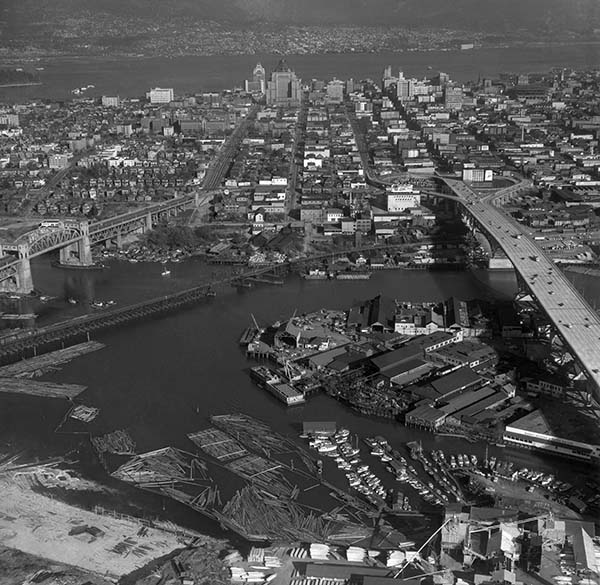
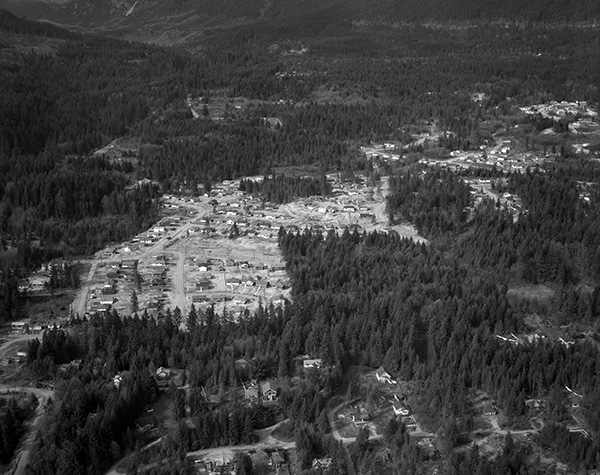
Historical air photos of British Columbia from the 1940's and 1950's


https://www.facebook.com/VintageAirPhotos/photos/a.409414512455314.91856.338791092850990/409414515788647/?type=1&theater

Historical air photos of British Columbia from the 1940's and 1950's. http://vintageairphotos.com

Facebook: https://www.facebook.com/VintageAirPhotos

 
 So from September 1995 to November 1999 I worked scanning aerial photography. If you read the  info on the link below you can see how things changed from film to digital. I graduated from Langara's Professional Photography program and after a brief stint on the cruiselines this is where I landed.

Scanning was totally new and we used very expensive high end scanners. I had the pleasure of working with Mark and his dad. I even got to teach Mark's dad how to use the scanners as the darkroom was phased out. I still remember my supervisor Doug, telling me he only wanted to learn from me. Not sure if that was completely true, ha! ha! but I like to think so. I taught everyone that came through the scanning department until I was phased out! :( but I digress!

I saw alot of those old photos in the basement of the building we worked. Once, and I know this is crazy stuff but I quit the company to go work on the Cruiseships...it didn't work out and I came back but was in between apartments. I lived in the basement for about a week...yikes...crazy..I worked the night shift and so I tried (not very successfully) to sleep in the basement during the day.

I learned a lot during the time I worked there...I learned Unix, and how to work on big computers with big files..well they were big then... 40 mb and 100mb were big deals then. Ha! ha!

I burned my first Cd's there...anyways...what I want to share is these great photographic images and how our province has changed. Amazing that it could be captured and now is being shared. You can see it for yourself and even buy a digital or photographic image. http://vintageairphotos.com/
Thanks for sharing these Mark!!

http://vintageairphotos.com/background/
Hi, my name is Mark, and I’ve got a kind of interesting story to tell:
My dad worked in the drafting/survey/mapping industry since the late 1940′s. I’d guess that throughout his career he probably worked for at least six different mapping companies here in the Vancouver, BC, area. That’s not to say that he had a lot of jobs, but rather that mapping companies here seem to change hands like hockey cards at an elementary school. I don’t think 5 years goes by without some mapping company being bought out, changing names, or both. The companies change names but the people remain the same. I know, because I’m in the mapping industry too. I’ve been working with air photos since pretty much the day I graduated high school, that’s coming up on 28 years ago. I even had the pleasure of working with my dad for about 10 of those years.
Read More Here

This is the area North of the Georgia Viaduct in Vancouver from 1951. Other streets visible in the image are Hastings Street, Pender Street and Carrall Street. This image has amazing clarity. You can really zoom into the streets. http://vintageairphotos.com/1-133/

The city of Kelowna in 1948 is practically unrecognisable. The street at the front of the picture is Water Street. The next one back is St. Paul Street. http://vintageairphotos.com/bo-48-3567/

This is Granville Island and part of downtown Vancouver from 1956. This is the “new” Granville Street bridge which is only 2 years old here. http://vintageairphotos.com/bo-56-316/
This is the Capilano Highlands area of North Vancouver from 1950. To give you a rough idea of where we are, Paisley Road falls near the center of the image. It’s very likely that the Capilano Suspension Bridge is actually toward the top-left corner, but is hidden behind all the trees. http://vintageairphotos.com/bo-50-54/

Monday, February 3, 2014

Hey Get Happy!!

Blog post by Tina Winterlik © 2014
zipolita@gmail.com
http://zipolitazstudioz.blogspot.com
http://twitter.com/#!/zipolita @zipolita
http://gplus.to/zipolita Google+


Hey Get Happy!!


 From the About page on YouTube

Kelowna, Canada is Happy eh! Pharrell Williams

The beautiful city of Kelowna in Canada's Okanagan, British Columbia shows you that it is one of the happiest places in the world. Ranked as British Columbia's happiest city and Canada's 8th ranked happiest city, Kelowna is an amazing place full of amazing people. Enjoy the video! Big thanks to:UBCO Urban Dance Club

Sunday, October 7, 2012

Cowichan River Heading for Disaster


Blog post by Tina Winterlik © 2012
tina_winterlik@yahoo.com
http://tinawinterlik.blogspot.com
http://twitter.com/#!/zipolita @zipolita
http://gplus.to/zipolita Google+

From Yahoo News

Cowichan River in danger of drying up, imperilling salmon runs

DUNCAN, B.C. - The Cowichan River could run bone dry before the end of the month if rain doesn't start falling by the bucketful, raising concerns for environmentalists, municipal officials and representatives of the nearby paper mill.  READ MORE HERE

OH NO!!No, No, No!!! My heart broke when I read this. We had the BEST time this summer and it was BECAUSE  of the BEAUTIFUL COWICHAN RIVER!! This is a GORGEOUS river. I mean ABSOLUTELY PRISTINE!

Photos by Tina Winterlik © 2012
We went WWOOF'ing this summer. My daughter and I stayed on at a Wellness Centre right beside the Cowichan River and every day we'd take their dog and head down there and play and relax and watch the tuberers go by. We met lots of wonderful people but it was the BEAUTY of this GORGEOUS GREEN RIVER that calmed our stress-ridden city minds and helped us remember the importance of life and nature and how really beautiful and tranquil life can be.


Photos by Tina Winterlik © 2012

Photos by Tina Winterlik © 2012

This news about there not being enough water and that it's going to dry up because some selfish lake cottagers don't want to lose their beach really disturbs me.

I sure hope something can be done. I guess we have to pray for rain for you guys. Which is sad because last year in BC there was just too frigging much rain and cold and grey days but this the Cowichan River is a Rainforest and it needs rain.


Photos by Tina Winterlik © 2012

Painting by Tina Winterlik © 2012


Here I guess are the drastic effects of climate change slapping us in the face. Wake up people!!

Anyways I want to share some videos and photos of the really great times we had there this summer and so people know first hand what could be lost. :(


Wednesday, May 4, 2011

Expo 86- I worked there


Blog post by Tina Winterlik © 2011

http://tinawinterlik.blogspot.com 


Wow, this is a cool video. Looking back it brings back so many memories. I graduated in 1980 and there just weren't alot of jobs, I lived out in the valley and you really needed a car.

I remembered working on a raspberry picking machine, picking mushrooms, packing eggs, and then somewhere in there I got the job at Expo 86 working graveyards, as a janitor.
  
I worked in building that burned down a while back. It was the main place for all the offices, the costumes, and I forget what else. (I didn't know it at the time, but it had been used to house the Japanese during the war, so had some "weird" energy there. )


It wasn't right on the grounds, it was over by the Chinese gardens, but I had to pass thru the grounds to get there. 


Every night I took the bus down Fraser St, and I could watch the fireworks. I only worked there a month, as I got another job.


It definitely stimulated the economy. I got paid $3.50, I think that was the minumum wage and at Expo I may have got $3.75  or maybe $4.25 I can't remember. After I quit I got a job in a laundry for $5. That was like hitting the big time. Then after a year I got a union job for $9. So things were looking up.


Anyways, here an old pic of me in my Expo86 uniform. Looks wrinkly. Oops! I think I just put it on quick to have a photo, as that pic is taken in the valley and I was living/working in Vancouver.


In my Expo86 uniform

I remember one cool thing, that after Expo86 ended, we all got a letter thanking us for our work from Jimmy Pattison. That was really cool for me. I'm pretty sure I still have it and a button and a few other momentos.

Saturday, April 2, 2011

$25,000 Science Scholarship


Blog post by Tina Winterlik © 2011

http://tinawinterlik.blogspot.com


Choose Science- Go Far


http://www.youtube.com/yearofsciencebc
Contest Rules
https://sites.google.com/site/yearofsciencebc/

1. CONTEST OVERVIEW:

1.1 Each entry to the Contest must consist of a video containing your child’s or legal ward’s (“the Child”) idea for a science experiment to be conducted by British Columbia scientists (the “Entry”). The Entry must not (a) contain more than one Child and (b) be longer than 90 seconds in length.

1.2 The Contest consists of the following two phases:
(a) The first phase begins at 1:00 p.m. PST, November 1, 2010 and closes at 11:59 p.m. PST April
15, 2011
(the “Submission Period”). During the Submission Period, individuals may submit one
or more online Entries. Each individual for which at least one Entry has been submitted during
the Submission Period will be eligible to win prizes, as further described below.

(b) The second phase begins at 6:00 p.m. PST, November 15, 2010 and closes at 11:59 p.m. PST
May 31, 2011
(the “Panel Judging Period”). During the Panel Judging Period, a panel made up
of three members of British Columbia’s science community (the “Judging Panel”) will view the
Entries submitted during the Submission Period and will choose:

i. one winner each month for the months of November 2010 to May 2011 inclusive,
excluding December 2010 (the “Monthly Prize Winners”); and
from the Monthly Prize Winners, one grand prize winner (the “Grand Prize
Winner”) on or before June 30, 2011.

ii. Only those Entries received during the Submission Period will be considered by the Judging Panel. The Monthly Prize Winners and Grand Prize Winners will be awarded prizes as further described in sections 6 below. The Submission Period and the Panel Judging Period are collectively referred to as the “Contest Period”.